
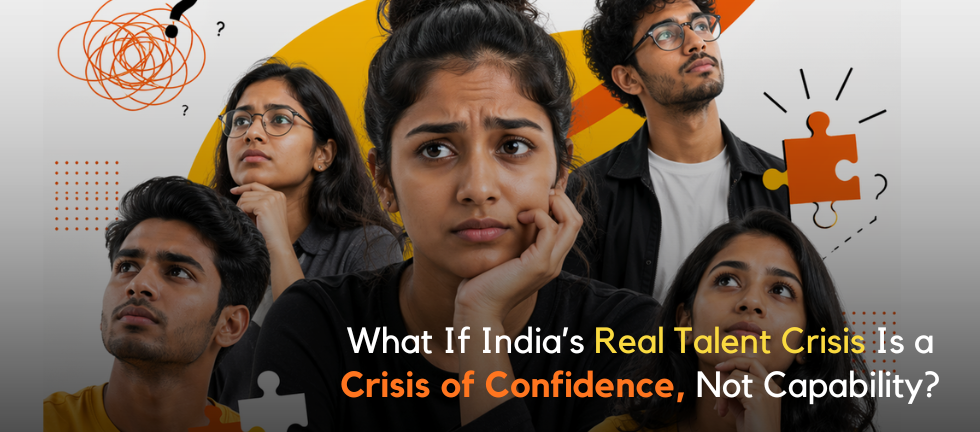
India produces millions of graduates every year.
Educated.
Qualified.
Certified.
Yet, inside organisations, a different pattern emerges:
𝗣𝗲𝗼𝗽𝗹𝗲 𝘄𝗵𝗼 𝗸𝗻𝗼𝘄… 𝗯𝘂𝘁 𝗵𝗲𝘀𝗶𝘁𝗮𝘁𝗲 𝘁𝗼 𝗮𝗰𝘁.
What if the real crisis is not capability—
but 𝗰𝗼𝗻𝗳𝗶𝗱𝗲𝗻𝗰𝗲?
𝗧𝗵𝗲 𝗦𝗶𝗹𝗲𝗻𝘁 𝗚𝗮𝗽 𝗶𝗻 𝘁𝗵𝗲 𝗪𝗼𝗿𝗸𝗳𝗼𝗿𝗰𝗲
Across industries, leaders observe:
• Employees waiting for instructions
• Reluctance to take ownership
• Fear of making mistakes
• Difficulty in decision-making
This is not a knowledge gap.
It is a 𝗰𝗼𝗻𝗳𝗶𝗱𝗲𝗻𝗰𝗲 𝗴𝗮𝗽.
𝗪𝗵𝘆 𝗖𝗼𝗻𝗳𝗶𝗱𝗲𝗻𝗰𝗲 𝗗𝗼𝗲𝘀𝗻’𝘁 𝗖𝗼𝗺𝗲 𝗳𝗿𝗼𝗺 𝗖𝗹𝗮𝘀𝘀𝗿𝗼𝗼𝗺𝘀
Confidence is not built through:
• Exams
• Certifications
• Theoretical learning
It is built through:
• Real responsibility
• Making decisions
• Learning from failure
• Delivering outcomes
Without exposure to real work, knowledge stays passive.
Confidence comes from 𝗱𝗼𝗶𝗻𝗴, 𝗻𝗼𝘁 𝗸𝗻𝗼𝘄𝗶𝗻𝗴.
𝗧𝗵𝗲 𝗖𝗼𝘀𝘁 𝗼𝗳 𝗟𝗼𝘄 𝗖𝗼𝗻𝗳𝗶𝗱𝗲𝗻𝗰𝗲
When confidence is missing:
• Productivity slows down
• Managers over-supervise
• Innovation reduces
• High-potential talent underperforms
Organisations end up with capable people—
who don’t fully utilise their capability.
𝗪𝗵𝗮𝘁 𝗛𝗶𝗴𝗵-𝗜𝗺𝗽𝗮𝗰𝘁 𝗢𝗿𝗴𝗮𝗻𝗶𝘀𝗮𝘁𝗶𝗼𝗻𝘀 𝗗𝗼 𝗗𝗶𝗳𝗳𝗲𝗿𝗲𝗻𝘁𝗹𝘆
They don’t just build skills.
They build 𝘀𝗲𝗹𝗳-𝗯𝗲𝗹𝗶𝗲𝗳 𝘁𝗵𝗿𝗼𝘂𝗴𝗵 𝗲𝘅𝗽𝗲𝗿𝗶𝗲𝗻𝗰𝗲.
They:
• Give early responsibility
• Create safe environments to learn from mistakes
• Integrate learning into real work
• Encourage ownership from the start
Over time, confidence compounds—and so does performance.
𝗧𝗵𝗲 𝗤𝘂𝗲𝘀𝘁𝗶𝗼𝗻 𝗟𝗲𝗮𝗱𝗲𝗿𝘀 𝗠𝘂𝘀𝘁 𝗥𝗲𝗳𝗹𝗲𝗰𝘁 𝗢𝗻
👉 Are we developing people who know…
or people who are ready to act?
Because the future workforce will not be defined by qualifications.
It will be defined by individuals who can step forward, take ownership, and deliver.
𝗔 𝗣𝗲𝗿𝘀𝗽𝗲𝗰𝘁𝗶𝘃𝗲 𝘁𝗼 𝗖𝗼𝗻𝘀𝗶𝗱𝗲𝗿
India may not lack capable people.
It may lack 𝘀𝘆𝘀𝘁𝗲𝗺𝘀 𝘁𝗵𝗮𝘁 𝗯𝘂𝗶𝗹𝗱 𝗰𝗼𝗻𝗳𝗶𝗱𝗲𝗻𝘁 𝗽𝗿𝗼𝗳𝗲𝘀𝘀𝗶𝗼𝗻𝗮𝗹𝘀.
And when confidence meets capability—
performance follows.